
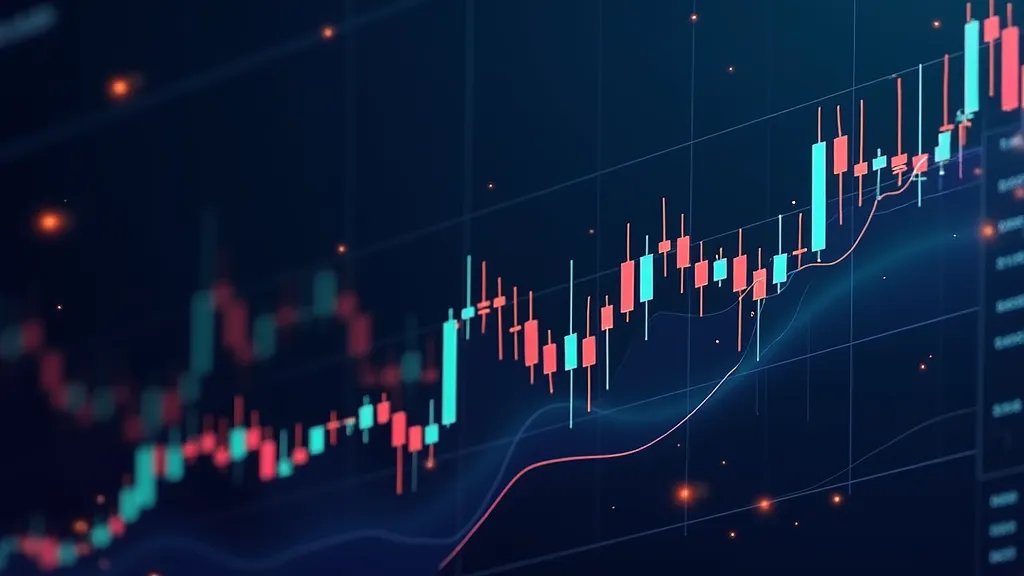
Understanding Technical Analysis in Crypto Trading: Key Indicators
Effective technical analysis in crypto trading is crucial. The crypto sector attracts a wide audience. It offers considerable opportunities to capitalize on market trends. To maximize gains and avoid losses, market analysis is vital. Fundamental and technical analysis provide tangible information. They help assess a crypto asset’s true value. They also predict likely future price movements. Understanding technical analysis in crypto trading empowers investors.
What is Technical Analysis (TA)?
Technical analysis (TA) is a widely used method. Investors and traders use it to anticipate future price prospects. It focuses mainly on trading volume and price history. External economic or political factors are not included. TA does not try to determine intrinsic asset value. Instead, it identifies trends and patterns in market behavior. Technical indicators and charts are its primary tools. Fundamental analysis (FA) evaluates true value based on underlying factors. TA assumes current price reflects all necessary information. It seeks opportunities based on market trends and psychology. This approach is central to technical analysis in crypto trading.
Origins and Evolution of TA
Technical analysis originated centuries ago. Early examples date to 17th century Amsterdam. And 18th century Japan. Charles Dow, Wall Street Journal founder, started modern TA. This evolved into Dow Theory. This theory states markets move in predictable stages. Past price patterns can help anticipate future developments. Computing technology in the late 20th century transformed TA. Manual calculations shifted to sophisticated software. This increased accessibility for traders and investors. The evolution of these methods is important for technical analysis in crypto trading.
How Technical Analysis Works: Key Indicators
TA is based on recurring market price trends. These recur due to market participant behavior. Analysis involves chart patterns and support/resistance levels. Momentum indicators are also key. Traders aim to predict future price movements. TA highlights the supply and demand struggle. This struggle is shaped by market sentiment (greed and fear). Price charts display this emotional battle. Key indicators in technical analysis in crypto trading include:
- Moving Averages (MA): These smooth out price data. Simple Moving Average (SMA) calculates mean price over a period. Exponential Moving Average (EMA) gives more weight to recent prices. It is more reactive to current market conditions.
- Bollinger Bands (BB): These contract and expand with market volatility. They are marked around an asset’s moving average. Prices moving outside these bands may signal breakouts or reversals.
- Relative Strength Index (RSI): This momentum oscillator ranges from 0 to 100. It measures recent price change speed and magnitude. RSI above 70 often signals an overbought condition. RSI below 30 may indicate an oversold market.
- Moving Average Convergence Divergence (MACD): This shows the relationship between two EMAs. It includes a signal line and a histogram. MACD helps spot momentum shifts and potential buy/sell opportunities.
TA also uses indicators that generate trading signals. These suggest entry or exit times. Examples include RSI oversold/overbought levels. MA crossovers like death cross and golden cross are also used. MACD Signal Line crossovers are another. However, these signals can be misleading. This is especially true in highly volatile markets. Using TA with other methods and risk management is crucial. This comprehensive approach enhances decision-making in technical analysis in crypto trading.
Why Technical Analysis Matters in Crypto
TA is important as it provides objective criteria. Traders rely on historical data, not emotions. TA helps detect trends and understand market behavior. It identifies support and resistance areas. This helps predict potential price responses. It allows timely entries and exits based on signals. The crypto market is highly volatile. It operates 24/7. It often lacks conventional valuation metrics. This makes TA particularly viable for crypto traders.
Key metrics TA covers in crypto include:
- Price Discovery: Many crypto assets lack extensive financial history. TA offers a lens to evaluate them.
- Risk Control: TA indicators help set profit targets and stop-losses. This manages risk effectively.
- Market Cycles: TA helps identify bullish and bearish cycles. This allows strategic, not emotional, trading.
- Short-Term Opportunities: The fast-paced crypto market offers many short-term chances. TA helps traders capitalize on these.
TA is a vital tool for crypto trading. It empowers data-driven decisions. While not guaranteeing success, TA enhances a trader’s ability. It helps spot opportunities, manage risk, and adapt. Understanding TA basics is valuable for informed crypto investing. This knowledge is fundamental for anyone engaging in technical analysis in crypto trading.